
















































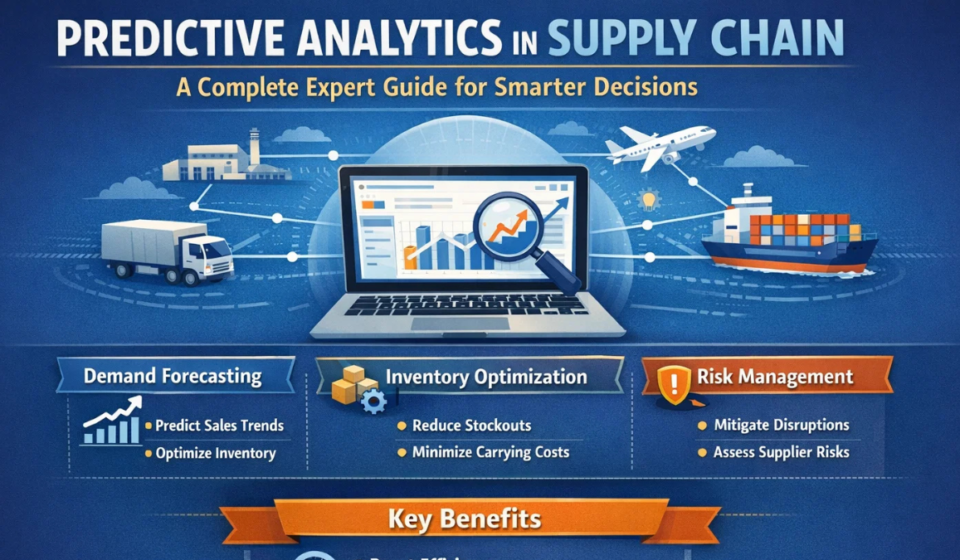

Predictive analytics in supply chain is changing the way businesses plan, move, and deliver products. In today’s fast-moving world, companies can’t afford guesswork. They need insight, foresight, and confidence. That’s exactly what predictive analytics brings to the table.
This article is a fully detailed, expert-level guide written in clear Grade 7 English. It explains what predictive analytics in supply chain means, why it matters, how it works, and how organizations can use it to grow stronger and smarter. The tone is formal, informative, and optimistic, while still sounding natural and human because learning shouldn’t feel stiff or confusing.
Let’s dive in and explore how predictive analytics in supply chain is shaping the future of global business.
Predictive Analytics in Supply Chain Explained Simply
Predictive analytics in supply chain is the use of data, statistics, and smart technology to predict what may happen next in supply chain operations. Instead of only looking at what happened in the past, companies use predictive models to look ahead.
In simple terms, it helps businesses answer questions like:
- What products will customers buy next month?
- How much stock should we keep?
- When could delays or shortages happen?
- Which supplier might fail to deliver on time?
By analyzing past data and current trends, predictive analytics gives early warnings and useful suggestions. It’s like having a crystal ball but one powered by real data, not magic.
Why Predictive Analytics in Supply Chain Matters Today
Supply chains are more complex than ever. Products travel across countries, rely on many suppliers, and must reach customers quickly. A small delay can cause big losses.
Here’s why predictive analytics in supply chain is so important today:
- Customer expectations are higher than ever
- Global disruptions happen more often
- Costs need tighter control
- Competition is intense
Predictive analytics helps businesses stay one step ahead. Instead of reacting to problems, they can prepare for them. And honestly, that’s a game-changer.
How Predictive Analytics in Supply Chain Works
Predictive analytics in supply chain doesn’t happen overnight. It follows a clear process that turns raw data into valuable insight.
Data Collection from Multiple Sources
The first step is gathering data. This data can come from:
- Sales history
- Inventory systems
- Supplier performance records
- Transportation logs
- Market trends and seasonal patterns
The more accurate and complete the data, the better the predictions.
Data Cleaning and Preparation
Raw data can be messy. Errors, duplicates, or missing values must be fixed. Clean data ensures reliable results. It may sound boring, but it’s absolutely crucial.
Advanced Analysis and Modeling
This is where the real magic happens. Tools like:
- Statistical models
- Machine learning algorithms
- Time-series analysis
are used to find patterns and trends. These models learn from the past to predict future outcomes.
Actionable Insights and Decisions
Finally, predictions are shared with decision-makers. Managers can then:
- Adjust inventory levels
- Change delivery routes
- Plan production schedules
- Negotiate better with suppliers
That’s predictive analytics in supply chain working at its best.
Key Components of Predictive Analytics in Supply Chain
To fully understand predictive analytics in supply chain, it helps to break it down into its core components.
Demand Forecasting
Demand forecasting predicts how much of a product customers will want in the future. This prevents:
- Overstocking
- Stockouts
- Lost sales
Accurate forecasts mean happier customers and lower costs.
Inventory Optimization
Predictive analytics helps businesses keep the right amount of stock at the right time. Not too much. Not too little. Just right.
Supplier Performance Analysis
By studying past supplier behavior, companies can predict:
- Late deliveries
- Quality issues
- Reliability risks
This builds stronger, more dependable supplier relationships.
Logistics and Transportation Planning
Predictive models can estimate:
- Delivery times
- Fuel costs
- Route delays
As a result, companies can plan smarter routes and avoid surprises.
Real-World Benefits of Predictive Analytics in Supply Chain
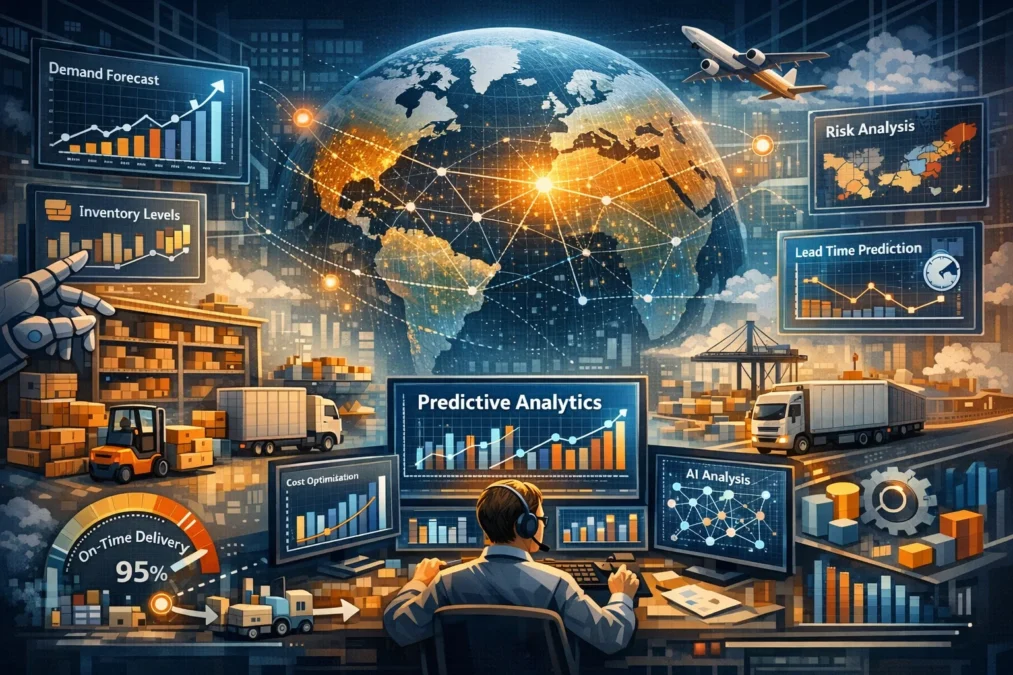
Let’s be honest technology only matters if it delivers results. Predictive analytics in supply chain offers clear, measurable benefits.
Better Decision-Making
Decisions are no longer based on gut feeling. They’re based on facts, trends, and probabilities.
Reduced Costs
Companies can cut costs by:
- Lowering excess inventory
- Avoiding rush shipping
- Reducing waste
Every saved dollar adds up.
Improved Customer Satisfaction
When products arrive on time and in good condition, customers notice. Predictive analytics helps businesses meet promises consistently.
Stronger Risk Management
Potential problems are identified early. That means fewer surprises and smoother operations.
Industries Using Predictive Analytics in Supply Chain
Predictive analytics in supply chain isn’t limited to one industry. It’s being used across many sectors.
Retail and E-Commerce
Retailers use predictive analytics to:
- Forecast seasonal demand
- Manage fast-moving products
- Avoid empty shelves
Manufacturing
Manufacturers rely on predictive analytics to:
- Plan production schedules
- Prevent machine breakdowns
- Manage raw material supply
Healthcare and Pharmaceuticals
In healthcare, predictive analytics helps ensure:
- Medicines are always available
- Sensitive products arrive on time
- Supply shortages are avoided
Food and Beverage
For perishable goods, timing is everything. Predictive analytics reduces spoilage and improves freshness.
Tools and Technologies Powering Predictive Analytics in Supply Chain
Behind predictive analytics in supply chain are powerful tools and technologies.
Artificial Intelligence and Machine Learning
AI systems learn from data and improve predictions over time. They can handle large data sets faster than humans ever could.
Big Data Platforms
Supply chains generate massive amounts of data. Big data tools store, process, and analyze this information efficiently.
Cloud Computing
Cloud-based systems allow real-time data sharing across teams, locations, and partners. It keeps everyone on the same page.
Advanced Analytics Software
Many platforms combine forecasting, visualization, and reporting in one place. This makes insights easier to understand and act on.
Challenges in Implementing Predictive Analytics in Supply Chain
While predictive analytics in supply chain offers many benefits, it’s not without challenges. Still, every challenge has a solution.
Data Quality Issues
Poor data leads to poor predictions. Businesses must invest in clean, accurate data collection.
High Initial Costs
Tools and training can be expensive at first. However, long-term savings often outweigh initial investments.
Skill Gaps
Teams may need training to understand and trust predictive models. Change can feel uncomfortable at first, but it’s worth it.
Integration with Existing Systems
Old systems may not connect easily with new analytics tools. Careful planning helps overcome this hurdle.
Best Practices for Successful Predictive Analytics in Supply Chain
To get the most from predictive analytics in supply chain, companies should follow proven best practices.
- Start with clear business goals
- Focus on high-quality data
- Involve both technical and business teams
- Test models before full deployment
- Continuously monitor and improve predictions
Rome wasn’t built in a day, and neither is a smart supply chain. Patience pays off.
Predictive Analytics in Supply Chain vs Traditional Forecasting
The difference between predictive analytics and traditional forecasting is huge. The table below makes it clear.
| Aspect | Traditional Forecasting | Predictive Analytics in Supply Chain |
|---|---|---|
| Data Used | Historical data only | Historical + real-time data |
| Accuracy | Limited | High and improving |
| Flexibility | Low | Very high |
| Risk Detection | Reactive | Proactive |
| Decision Speed | Slow | Fast |
This comparison shows why predictive analytics in supply chain is the smarter choice.
The Future of Predictive Analytics in Supply Chain
The future looks bright for predictive analytics in supply chain. As technology advances, predictions will become even more accurate.
We can expect:
- More automation in decision-making
- Real-time predictions across global networks
- Smarter risk detection systems
- Closer collaboration between humans and AI
In short, supply chains will become faster, safer, and more resilient.
How Businesses Can Get Started with Predictive Analytics in Supply Chain
Starting doesn’t have to be overwhelming. Businesses can take small, confident steps.
- Identify one problem area, like inventory or demand
- Gather reliable data
- Choose scalable analytics tools
- Train teams gradually
- Measure results and adjust
Little by little, predictive analytics becomes part of everyday operations.
Building Trust and Confidence with Predictive Analytics in Supply Chain
Trust is key. When teams see accurate predictions turning into real success, confidence grows. Over time, predictive analytics becomes a trusted advisor, not just a tool.
Leaders who invest in predictive analytics in supply chain show:
- Strategic thinking
- Long-term vision
- Commitment to efficiency
That builds trust with partners, employees, and customers alike.
Final Thoughts on Predictive Analytics in Supply Chain
Predictive analytics in supply chain is no longer a luxury it’s a necessity. It empowers businesses to move from reactive to proactive, from uncertain to confident, and from average to exceptional.
By using data wisely, companies can predict demand, manage risks, cut costs, and delight customers. Sure, the journey takes effort, but the rewards are worth it.
In the end, predictive analytics in supply chain isn’t just about technology. It’s about smarter decisions, stronger systems, and a brighter future. And honestly, that’s something every business can get behind.
You may also read
Magacoin Finance: A Complete and Trustworthy Guide for Beginners and Enthusiasts