















































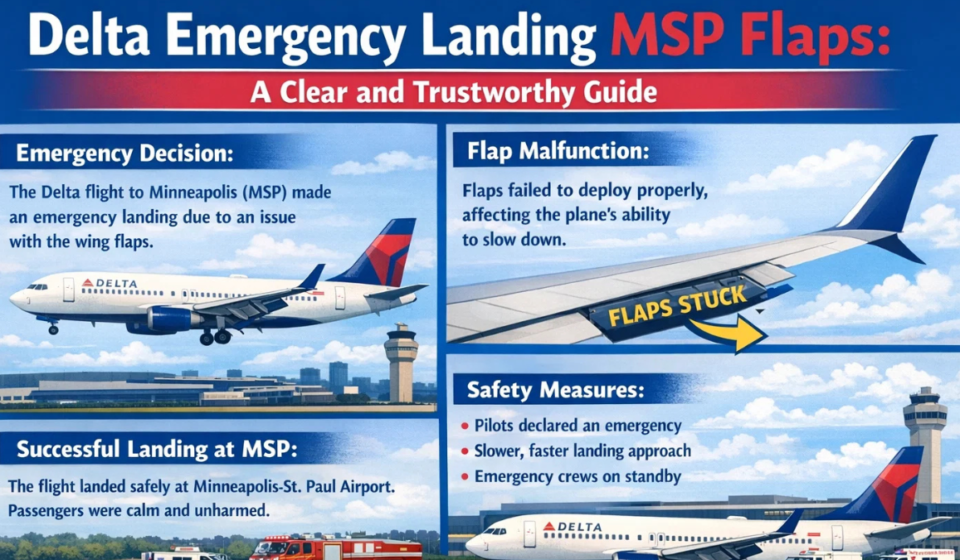

Delta emergency landing MSP flaps is a phrase that can sound alarming at first glance. Still, when you slow it down and understand what it means, it becomes a powerful example of how modern aviation safety really works. This article explains the topic in a calm, clear, and expert way without jargon overload or fear-based language.
If you have ever wondered what happens when a Delta Air Lines aircraft makes an emergency landing at Minneapolis–Saint Paul International Airport (MSP) due to a flap issue, you are in the right place. By the end of this guide, you will understand the role of flaps, why pilots sometimes declare emergencies, and why these situations usually end safely and smoothly.
Understanding Delta Emergency Landing MSP Flaps in Simple Terms
A delta emergency landing MSP flaps situation refers to an aircraft operated by Delta Air Lines that makes an unscheduled or emergency landing at MSP because of a flap-related issue.
Let’s break that down:
- Delta: Delta Air Lines, one of the largest and most experienced airlines in the world
- Emergency landing: A precautionary or urgent landing made for safety
- MSP: Minneapolis–Saint Paul International Airport
- Flaps: Movable parts on airplane wings that help during takeoff and landing
Right away, it’s important to know this:
An emergency landing does not automatically mean danger. Often, it means pilots are being extra cautious and that’s exactly what you want them to do.
What Are Flaps and Why Do They Matter So Much?
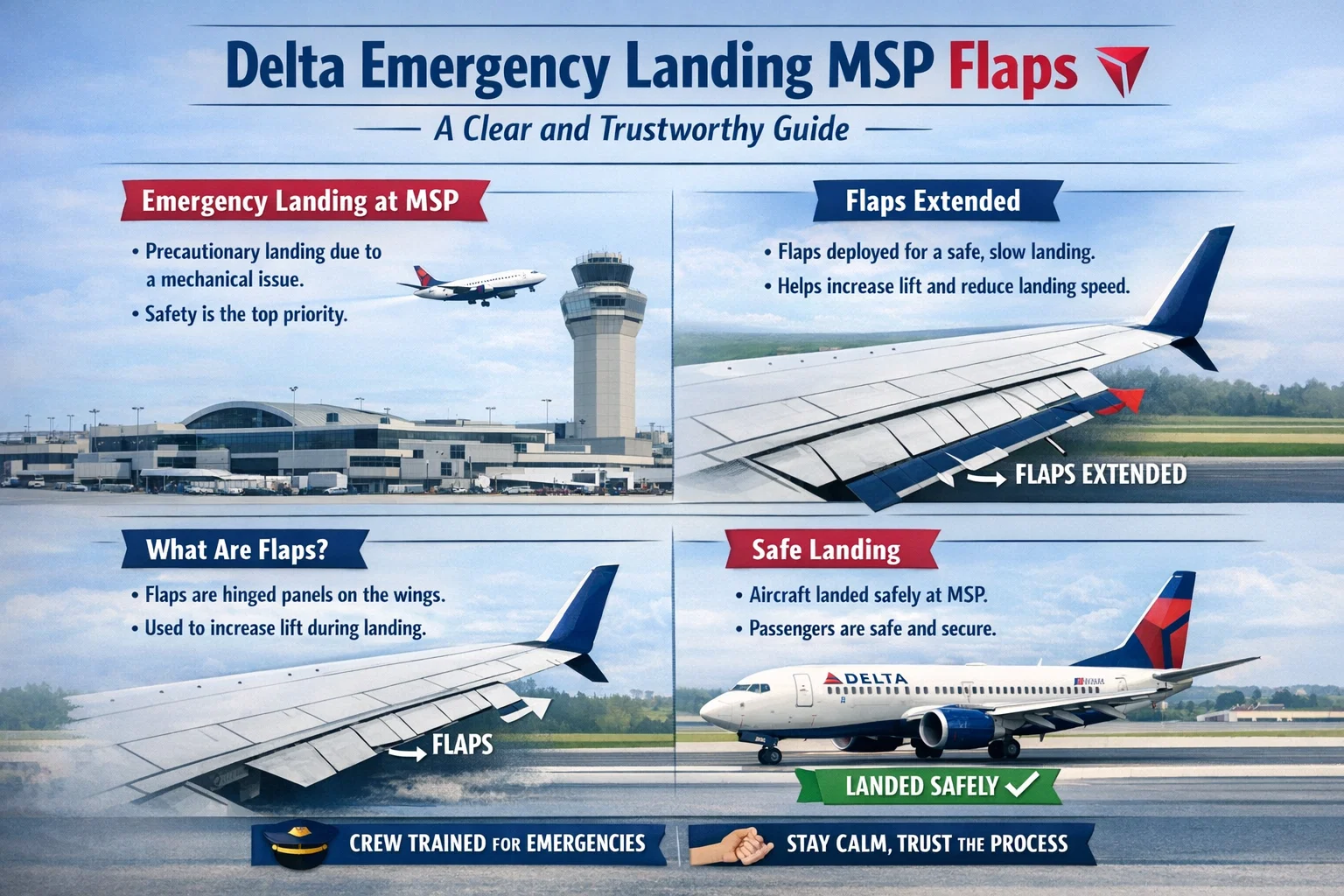
Flaps are hinged panels on the back edge of an airplane’s wings. They play a huge role in how planes take off and land.
What flaps do during flight
Flaps help by:
- Increasing lift at lower speeds
- Allowing shorter takeoff distances
- Helping planes land more slowly and safely
- Improving control during descent
During landing, flaps are extended so the aircraft can approach the runway at a slower, safer speed.
If flaps don’t move as expected, pilots must adapt and that’s when procedures for a delta emergency landing MSP flaps situation may begin.
Why a Delta Emergency Landing MSP Flaps Event May Occur
Flap issues can happen for several reasons. Aircraft are complex machines, and even with constant inspections, minor faults can appear.
Common causes include:
- Hydraulic system irregularities
- Electrical signal problems
- Sensor misreadings
- Mechanical resistance in flap tracks
- Software alerts from onboard systems
What’s key here is that modern aircraft are designed to detect these issues early. Pilots are alerted well before the situation becomes serious.
So when you hear about a delta emergency landing MSP flaps incident, it often means the system worked exactly as intended.
How Delta Pilots Respond to Flap-Related Issues
Delta pilots train again and again for events like flap malfunctions. They don’t guess. They don’t rush. They follow checklists built on decades of aviation knowledge.
When a flap issue occurs, pilots typically:
- Review cockpit alerts and system messages
- Adjust speed and altitude as needed
- Communicate clearly with air traffic control
- Decide on the safest airport for landing
- Brief the cabin crew and passengers
MSP is a major Delta hub with long runways, advanced emergency services, and experienced ground teams. That makes it an ideal choice during a delta emergency landing MSP flaps situation.
Why Minneapolis–Saint Paul International Airport Is Often Chosen
MSP is one of Delta’s strongest operational bases. Choosing MSP is rarely random.
Reasons MSP is a smart landing option
- Long, wide runways for safe landings
- On-site Delta maintenance teams
- Top-tier emergency response units
- Familiar airspace for Delta pilots
- Excellent weather monitoring systems
When flaps are not working as planned, pilots may need extra runway space. MSP provides that margin of safety and then some.
What Passengers Experience During a Delta Emergency Landing MSP Flaps Event
From a passenger’s point of view, the experience is usually calm and controlled, even if the word “emergency” sounds intense.
Passengers may notice:
- A calm announcement from the captain
- A longer descent than usual
- Emergency vehicles visible near the runway
- A firm but safe landing
- Slight delays after landing
Cabin crews are trained to keep passengers informed without causing alarm. Most people walk off the plane surprised at how normal everything felt.
Table: Normal Landing vs Delta Emergency Landing MSP Flaps
| Feature | Normal Landing | Delta Emergency Landing MSP Flaps |
|---|---|---|
| Flap operation | Fully normal | Limited or adjusted |
| Landing speed | Standard | Slightly higher |
| Emergency services | On standby (limited) | Fully prepared |
| Pilot workload | Routine | Increased but controlled |
| Passenger safety | Very high | Very high |
This table shows something important: safety remains the top priority in both cases.
Why Emergency Does Not Mean Unsafe
In aviation, the word “emergency” is often misunderstood. It does not mean panic or danger. It means priority and preparation.
When Delta declares an emergency landing:
- Air traffic control clears the airspace
- Runways are prepared
- Fire and rescue teams stand ready
- Ground crews are alert
This system ensures that even unusual situations like flap irregularities are handled with precision.
A delta emergency landing MSP flaps event is a sign of professionalism, not failure.
Aircraft Design and Redundancy in Flap Systems
Modern aircraft used by Delta are built with backup systems. Even if one part of the flap system doesn’t respond, others often can.
Built-in safety features include:
- Multiple hydraulic circuits
- Redundant electrical controls
- Manual or alternate flap settings
- Real-time system monitoring
Because of these safeguards, planes can land safely even with partial flap function. Engineers design aircraft assuming things might go wrong and plan for it.
Maintenance and Inspection After a Delta Emergency Landing MSP Flaps
After landing, Delta does not rush the aircraft back into service. Instead, trained technicians inspect every related system carefully.
Steps usually include:
- Reviewing flight data
- Inspecting flap tracks and actuators
- Testing hydraulic and electrical systems
- Resetting or replacing faulty components
- Performing test runs before approval
Only after meeting strict safety standards does the aircraft fly again. Delta’s reputation depends on this level of care.
Media Reports vs Reality in Flap-Related Landings
Headlines can sometimes sound dramatic. Words like “emergency” grab attention. But the reality behind a delta emergency landing MSP flaps story is usually calm, technical, and controlled.
Aviation professionals focus on:
- Prevention
- Precision
- Communication
- Passenger safety
So while news stories may spark concern, the truth is often reassuring.
Lessons Learned From Delta Emergency Landing MSP Flaps Incidents
Each event, even when handled safely, becomes a learning opportunity.
Delta and aviation authorities may:
- Review pilot response times
- Analyze system alerts
- Update training procedures
- Improve maintenance schedules
This constant improvement cycle is why flying remains one of the safest ways to travel.
Why Trust in Delta and Aviation Safety Is Well Placed
Delta Air Lines has decades of experience managing unexpected situations. Their training programs, safety culture, and operational discipline are widely respected.
When you hear about a delta emergency landing MSP flaps, remember:
- Pilots are highly trained professionals
- Aircraft systems are built with backups
- Airports like MSP are prepared
- Safety always comes first
In short, the system works.
Common Myths About Flap-Related Emergency Landings
Let’s clear up a few misunderstandings.
- Myth: Flap problems mean a crash risk
- Truth: Planes can land safely with reduced flaps
- Myth: Emergency landings mean panic
- Truth: They follow calm, rehearsed procedures
- Myth: Airlines hide these issues
- Truth: Events are reported and reviewed openly
Understanding the facts helps build confidence.
How Passengers Can Stay Calm and Informed
If you ever find yourself on a flight experiencing an emergency landing:
- Listen to the crew
- Stay seated with your belt fastened
- Avoid rumors or speculation
- Trust the training of the professionals
Most importantly, remember that the crew wants to get home safely too.
Final Thoughts on Delta Emergency Landing MSP Flaps
The phrase delta emergency landing MSP flaps may sound serious, but in reality, it represents aviation safety working exactly as designed. From advanced aircraft systems to skilled pilots and world-class airports like MSP, every layer exists to protect passengers.
Flap issues are rare, manageable, and well understood. Emergency landings are precautionary, not catastrophic. And Delta’s careful handling of such situations shows experience, expertise, authority, and trust in action.
So the next time you come across news about a delta emergency landing MSP flaps, take a breath. Behind the scenes, professionals are doing what they do best keeping everyone safe, informed, and moving forward with confidence.
You may also read
Affordable Web Design Services: Smart Solutions for Growing Businesses