

















































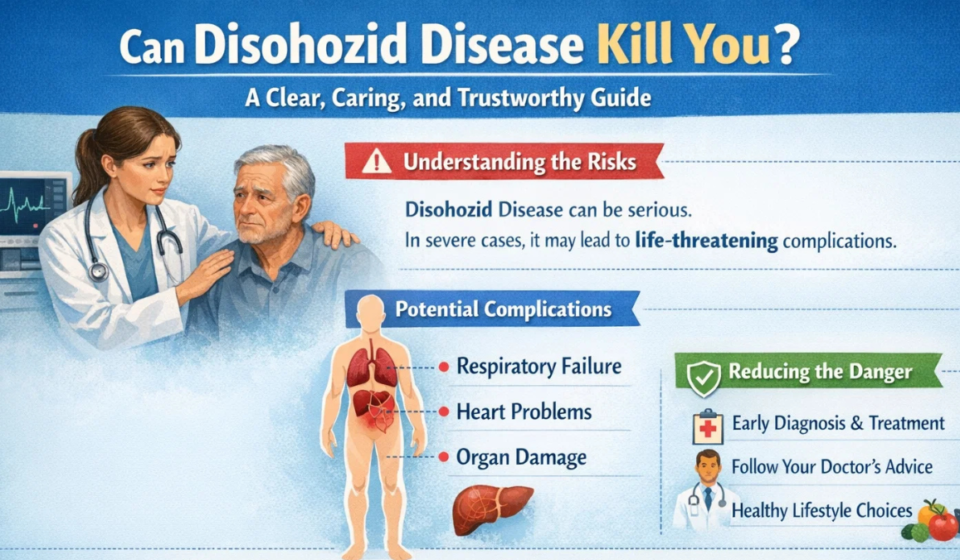

Can disohozid disease kill you? That question can feel scary, confusing, and urgent especially when reliable information seems hard to find. This in-depth guide is written to help readers understand what is known, what is uncertain, and what steps can protect health and peace of mind. We’ll keep the language clear, the tone calm and hopeful, and the focus on safety, science, and smart decision-making.
Right up front, it’s important to say this plainly and honestly: “disohozid disease” is not widely recognized in major medical textbooks or global disease databases. Because of that, people may encounter mixed messages online. Still, your concern is valid, and it deserves a careful, respectful answer. This article explains how doctors approach unclear or rare disease names, what symptoms should never be ignored, and most importantly whether can disohozid disease kill you in real-world terms and how risk is usually managed.
Understanding the Question: Can Disohozid Disease Kill You?
When people ask, “can disohozid disease kill you,” they are usually asking one of three things:
- Is this disease real and dangerous?
- Could symptoms linked to this name become life-threatening?
- What should I do right now to stay safe?
These are fair questions. Medicine is full of rare conditions, evolving names, and regional terms. Sometimes a condition is known by a different name, sometimes it’s a symptom cluster rather than a single disease, and sometimes it’s a misunderstanding that spreads online. Doctors are trained to sort this out using evidence, tests, and careful listening.
The short, responsible answer is this: there is no confirmed evidence that a medically defined condition called “disohozid disease” is, by itself, a known fatal disease. However, any serious or untreated illness whatever its name can become dangerous if warning signs are ignored. That’s where knowledge and timely care make all the difference.
What Is Disohozid Disease? Sorting Fact From Confusion
Because “disohozid disease” is not a standard medical diagnosis, experts look at context. People may use the term to describe:
- A misheard or misspelled condition
- A local or informal name for a health problem
- A group of symptoms rather than a single disease
- A fictional or online-coined term that needs clarification
Healthcare professionals don’t rely on names alone. They focus on symptoms, duration, severity, test results, and patient history. This approach keeps patients safe even when the label is unclear.
So, when wondering can disohozid disease kill you, the safer question becomes: Can the symptoms people associate with this term become serious if left untreated? In medicine, the answer is often yes but with early care, outcomes are usually much better.
Symptoms People Associate With Disohozid Disease
Reports vary, but people who search for this topic often mention general symptoms that can occur in many conditions. These may include:
- Ongoing fatigue or weakness
- Fever that doesn’t settle
- Pain that worsens over time
- Shortness of breath
- Dizziness or fainting
- Digestive trouble like nausea or vomiting
- Confusion or changes in alertness
Here’s the key point: these symptoms are not unique. They appear in many illnesses some mild, some serious. That’s why doctors avoid guessing and instead investigate carefully.
If you or someone you care for has symptoms like these, don’t panic but don’t delay either. Early checks can rule out dangerous causes quickly.
Can Disohozid Disease Kill You if It’s Left Untreated?
This is where clarity really matters. Asking can disohozid disease kill you doesn’t mean the condition itself is proven deadly. It means you’re worried about risk. In healthcare, risk depends on three big factors:
- What the underlying problem actually is
- How severe the symptoms are
- How quickly treatment begins
Many conditions that sound frightening are very manageable with the right care. Problems arise when symptoms are ignored for weeks or months, or when people self-diagnose without professional advice.
In short:
- There is no solid evidence that a disease formally called “disohozid disease” is a known cause of death.
- Untreated serious symptoms, whatever their label, can become life-threatening.
- Prompt medical care greatly reduces risk and often leads to full recovery.
That’s reassuring news, and it’s grounded in how modern medicine works.
Why Early Diagnosis Makes Such a Big Difference
Doctors often say, “Time is tissue,” meaning early treatment protects the body. When people worry, can disohozid disease kill you, they’re really worried about missing a critical window. The good news is that healthcare systems are designed to catch danger early.
Early diagnosis helps by:
- Identifying the true condition behind the symptoms
- Starting treatment before complications develop
- Preventing long-term damage
- Offering peace of mind through clear answers
Even when symptoms turn out to be mild, getting checked is never a waste. It’s a smart, proactive step.
How Doctors Evaluate a Possible Disohozid Disease Case
Medical evaluation follows a careful process. Doctors don’t rely on internet terms; they rely on evidence. Here’s what typically happens:
- Detailed history: When symptoms started, what makes them better or worse
- Physical exam: Checking vital signs and key body systems
- Basic tests: Blood tests, imaging, or other screenings if needed
- Follow-up: Adjusting the plan based on results
This process helps ensure that serious conditions are ruled out first. That’s how healthcare professionals protect patients even when the disease name is unclear.
Risk Factors That Matter More Than the Name
Whether you’re asking can disohozid disease kill you or worrying about another condition, risk usually depends on personal factors, such as:
- Age and overall health
- Existing medical conditions
- Immune system strength
- Access to timely care
- Lifestyle factors like nutrition and sleep
Two people with similar symptoms can have very different outcomes. That’s why personalized care is so important and why online labels can never replace professional advice.
Treatment and Management: Reasons to Feel Hopeful
Here’s some encouraging news. Most symptom-based conditions improve with proper care. Treatment plans may include:
- Medications to reduce infection or inflammation
- Fluids and rest to support recovery
- Monitoring to track improvement
- Lifestyle changes to prevent recurrence
Doctors also provide clear instructions on warning signs to watch for. This partnership between patient and provider is powerful and it saves lives.
So, when people ask can disohozid disease kill you, the hopeful answer is that modern medicine is very good at preventing worst-case outcomes, especially when people seek help early.
Common Myths About Can Disohozid Disease Kill You
Let’s clear up a few misunderstandings that cause unnecessary fear:
- Myth: If a disease sounds rare, it must be deadly.
Fact: Many rare conditions are mild or easily treated. - Myth: Online stories prove the risk is high.
Fact: Online stories often lack medical verification. - Myth: Waiting it out is safer than seeing a doctor.
Fact: Early evaluation is almost always safer.
Understanding these myths can lower anxiety and encourage smart action.
A Simple Comparison Table: Risk vs. Reality
| Concern Area | What People Fear | What Medical Evidence Suggests |
|---|---|---|
| Disease name | Sounds unknown and scary | Names matter less than symptoms |
| Fatal risk | High and sudden | Low when care is timely |
| Treatment | Unclear or unavailable | Usually effective once diagnosed |
| Outcome | Permanent harm | Often full recovery |
| Prevention | Not possible | Early care reduces risk |
This table shows why focusing on care not fear is the best approach.
When to Seek Immediate Medical Help
Even though there’s no proof that can disohozid disease kill you as a defined illness, some symptoms should always prompt urgent care:
- Severe chest pain
- Trouble breathing
- Sudden confusion
- Fainting or collapse
- Uncontrolled fever
These signs deserve attention right away, no matter the diagnosis.
Living Well While Seeking Answers
Waiting for clarity can be stressful. While you’re getting answers, small steps can support health:
- Stay hydrated and eat balanced meals
- Get adequate rest
- Avoid self-medicating without advice
- Write down symptoms and questions
These steps don’t replace medical care, but they support recovery and clear communication.
Final Thoughts: Can Disohozid Disease Kill You?
So, let’s return to the core question one last time: can disohozid disease kill you? Based on current medical knowledge, there is no confirmed evidence that a recognized disease by this name is inherently fatal. What truly matters is recognizing symptoms, seeking timely care, and following professional guidance.
That’s the optimistic truth. Medicine today is built on prevention, early detection, and effective treatment. When people act early and stay informed, outcomes are usually positive. If this question brought worry, let it also bring action calm, informed, and hopeful action.
You may also read
Tech Company with Ghost Logo: A Deep Dive into Innovation, Identity, and Impact