















































How Lifestyle Tech Trends and Text to Voice Tools Are Changing How We Work and Communicate Daily

Introduction
Lifestyle technology no longer sits on the sidelines of our routines. It shapes how we wake up, plan tasks, attend meetings, and stay connected. From smart assistants to AI-driven communication tools, our daily work and conversations now depend on digital systems that respond instantly and intelligently. One of the most impactful innovations in this shift is text to voice, a tool that converts written content into natural-sounding speech.
This article explores how lifestyle tech trends influence the way we work and communicate every day. You will learn what these trends mean, how they affect productivity, and what actionable steps you can take to adapt effectively.
What Are Lifestyle Tech Trends and Why Do They Matter?
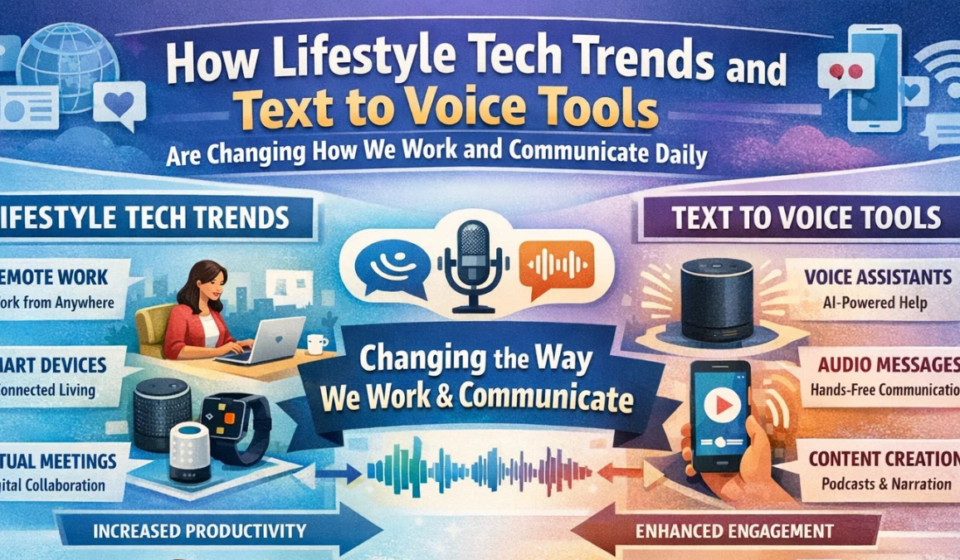
Lifestyle tech trends refer to digital innovations that blend into daily life and change how people interact, work, and communicate. These include:
- AI-powered assistants
- Smart devices and wearables
- Automation platforms
- Remote collaboration tools
- Voice-enabled systems
According to a 2023 report by Pew Research Center, a majority of adults now rely on digital tools for work communication and personal organization. This shift signals a clear transformation in daily habits.
Key Definition: Text to Voice
Text to voice is a technology that converts written text into spoken audio using artificial intelligence and speech synthesis algorithms. Modern systems generate natural, human-like speech and support multiple languages and tones.
These technologies matter because they reduce friction in communication. They allow people to multitask, access information faster, and collaborate without physical presence. Instead of typing long messages or reading lengthy reports, users can listen, respond by voice, and automate workflows.
In short, lifestyle tech makes work more flexible and communication more dynamic.
Key Takeaway: Lifestyle tech trends integrate digital tools into everyday routines, making communication faster, more accessible, and increasingly voice-driven.
How Text to Voice Technology Is Transforming Communication
Communication has shifted from static emails and long documents to more fluid, multimedia formats. Text to voice plays a central role in this transformation.
1. Improving Accessibility
Text to voice increases access for:
- People with visual impairments
- Individuals with reading difficulties
- Multilingual audiences
- Busy professionals who prefer audio content
The World Health Organization highlights the importance of accessible communication technologies in promoting digital inclusion. Voice-based tools ensure information reaches a wider audience.
2. Enhancing Multitasking
Modern professionals rarely focus on one task at a time. They commute, manage meetings, and process information simultaneously. Listening to reports, articles, or instructions through text to voice allows them to absorb content while driving or exercising.
3. Supporting Global Communication
Voice synthesis tools now provide natural accents and multilingual support. Teams across continents use them to review documents or training materials without language barriers.
For readers interested in broader digital transformation trends, Newshubon’s coverage of emerging tech and AI innovations offers useful context on how automation continues to shape global industries.
Key Takeaway: Text to voice tools make communication more inclusive, flexible, and global by turning written content into accessible audio experiences.
Remote Work and the Rise of Voice-First Workflows
Remote and hybrid work models have accelerated lifestyle tech adoption. According to data from McKinsey & Company, hybrid work remains a dominant model in many industries, with employees spending part of their week outside traditional offices.
This shift creates new communication demands.
Voice Messages Replace Long Emails
Instead of drafting long emails, many teams now use:
- Voice notes in collaboration apps
- AI-generated meeting summaries
- Audio briefings for project updates
Voice adds tone and clarity. It reduces misunderstandings that often occur in text-only communication.
AI-Powered Meeting Transcriptions
AI tools now convert live speech into text and then back into structured summaries. Some systems combine transcription and text to voice, allowing team members to replay summarized discussions.
This improves:
- Accountability
- Information retention
- Time efficiency
Reduced Cognitive Overload
Reading screens for long hours leads to fatigue. Audio-based workflows reduce eye strain and allow mental breaks while still processing information.
Key Takeaway: Remote work encourages voice-first communication, where text to voice and audio tools streamline collaboration and reduce digital fatigue.
Smart Devices and the Always-Connected Lifestyle
Smart speakers, wearable devices, and AI assistants have normalized voice interaction.
Today, professionals:
- Ask smart assistants to schedule meetings
- Dictate notes through mobile devices
- Convert reports into audio for review
This constant connectivity changes expectations. People now expect instant responses and hands-free solutions.
The Shift Toward Conversational Interfaces
A conversational interface allows users to interact with technology through natural language rather than manual input.
Examples include:
- Voice-activated customer support
- Interactive voice search
- AI chat systems integrated with speech output
Voice search, in particular, continues to grow. Google notes that voice queries are often longer and more conversational than typed searches. This influences how businesses structure content and optimize for search engines.
Lifestyle tech trends push communication toward a more natural, speech-based model.
Key Takeaway: Smart devices and conversational interfaces normalize voice interaction, making speech-based communication a daily standard.
Productivity, Focus, and Cognitive Shifts
Technology does not only change tools. It reshapes thinking patterns.
Faster Information Processing
Audio learning speeds up content consumption. Many professionals listen to documents at 1.25x or 1.5x speed, increasing productivity without sacrificing comprehension.
Reduced Typing, Increased Thinking
When people rely less on manual typing, they spend more time:
- Strategizing
- Analyzing
- Making decisions
Voice tools allow ideas to flow more naturally. Speaking often feels faster and less restrictive than writing.
Risk of Overdependence
However, lifestyle tech trends also bring challenges:
- Notification overload
- Reduced face-to-face interaction
- Privacy concerns
Balancing automation with mindful communication becomes essential.
Key Takeaway: Voice-driven tools improve productivity and idea flow, but users must manage digital overload carefully.
Actionable Ways to Adapt to Voice-Driven Workflows
To benefit from these trends, individuals and teams should adopt practical strategies.
1. Integrate Text to Voice for Content Review
Convert long reports or articles into audio. Review them during commutes or exercise.
2. Use Voice Notes for Quick Updates
Replace lengthy email chains with concise voice summaries when appropriate.
3. Optimize Content for Voice Search
Structure content in:
- Question-based headings
- Clear definitions
- Short paragraphs
This improves discoverability in voice-based queries.
4. Set Communication Boundaries
Schedule notification-free periods to avoid burnout.
5. Prioritize Accessibility
Ensure workplace materials are available in both text and audio formats.
These steps help organizations stay competitive while supporting inclusive communication practices.
Key Takeaway: Adopting voice tools strategically enhances productivity, accessibility, and communication clarity.
How Lifestyle Tech Trends Influence Workplace Culture
Beyond tools and productivity, lifestyle technology shapes workplace culture.
More Informal Communication
Voice notes and AI chats encourage conversational tone. Hierarchies feel flatter when communication becomes more direct and natural.
Increased Global Collaboration
Teams collaborate across time zones using asynchronous audio updates. Text to voice enables members to listen instead of reading lengthy documentation.
Data-Driven Decisions
AI-powered tools analyze voice patterns, sentiment, and meeting discussions. This provides insights into team dynamics and performance.
For broader insights into how digital behavior trends influence industries, explore related technology and business analysis coverage on Newshubon, which frequently reports on innovation-driven shifts.
Key Takeaway: Lifestyle tech trends foster flexible, global, and data-informed workplace cultures centered around efficient communication.
Frequently Asked Questions
1. What is text to voice technology?
Text to voice is an AI-driven system that converts written text into natural-sounding spoken audio.
Summary: Text to voice transforms written content into speech using artificial intelligence.
2. How does voice technology improve workplace productivity?
It reduces reading time, supports multitasking, and streamlines communication through audio summaries and voice notes.
Summary: Voice tools boost productivity by saving time and reducing screen fatigue.
3. Is voice communication replacing written communication?
Not entirely. Voice complements written formats by offering flexibility and accessibility.
Summary: Voice enhances, but does not fully replace, traditional written communication.
4. Are there risks in relying heavily on voice technology?
Yes. Overuse can increase distractions and raise privacy concerns if not managed properly.
Summary: Voice technology requires balanced use to avoid overload and security risks.
5. How can businesses prepare for voice-first trends?
They can optimize content for voice search, adopt audio collaboration tools, and ensure accessible communication formats.
Summary: Businesses should integrate voice tools strategically and maintain inclusive practices.
Conclusion: The Future of Daily Work and Communication
Lifestyle tech trends continue to blur the line between digital and physical experiences. Voice-enabled systems, smart devices, and AI-driven automation redefine how we process information and connect with others. Among these innovations, text to voice stands out as a powerful bridge between written content and human interaction.
As work becomes more flexible and communication more immediate, professionals must adapt thoughtfully. Embracing voice tools while maintaining clarity, accessibility, and balance will shape the next phase of modern work.
Final Summary: Lifestyle tech trends, especially text to voice tools, are reshaping daily work and communication by improving accessibility, boosting productivity, and promoting voice-first collaboration in modern workplaces.